From $192K to $737K
Monthly Revenue
A 14-month organic SEO campaign for a Shopify store — growing monthly revenue by 284%, monthly sessions by 312%, and monthly orders by 226% through full-stack SEO execution.
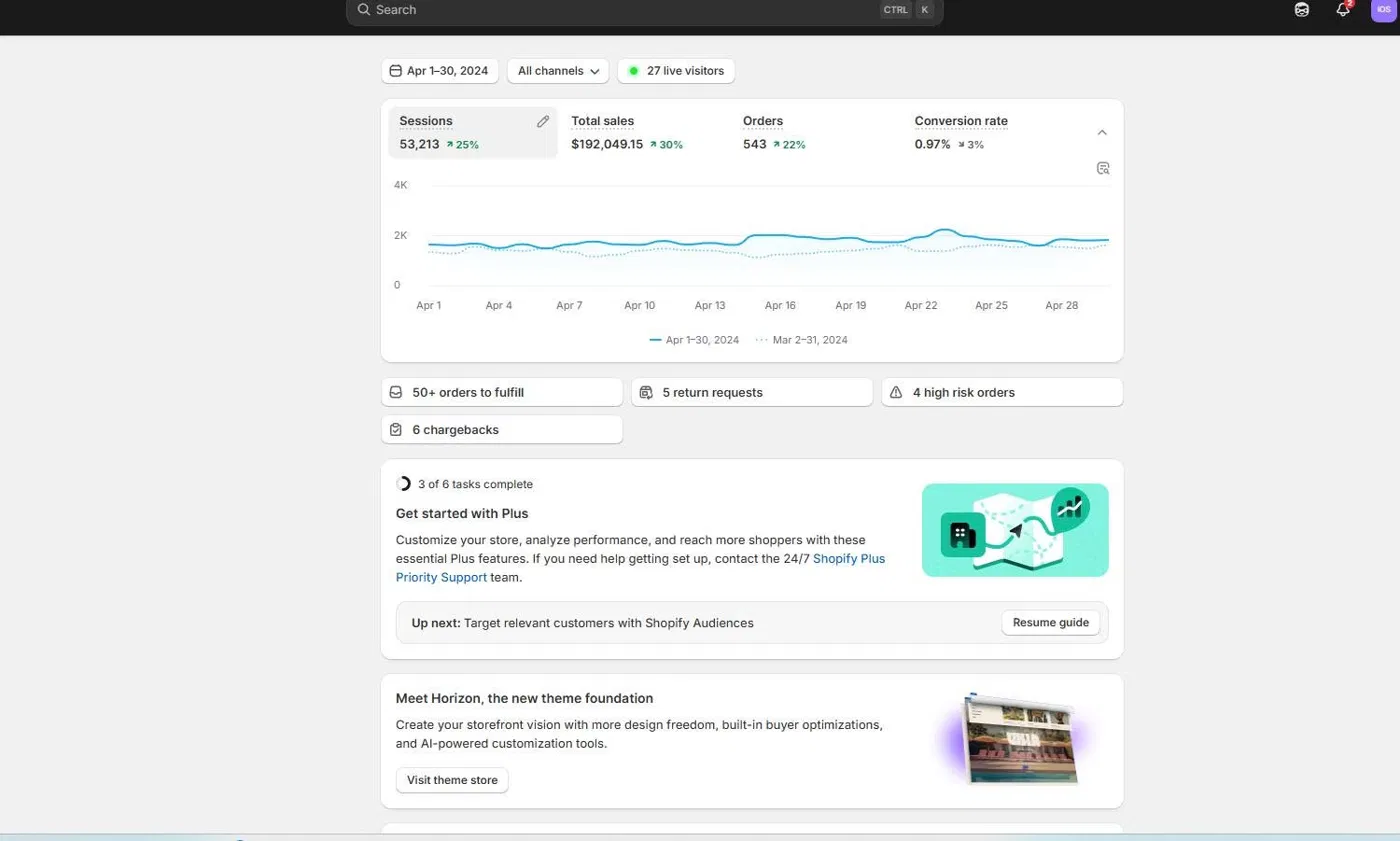
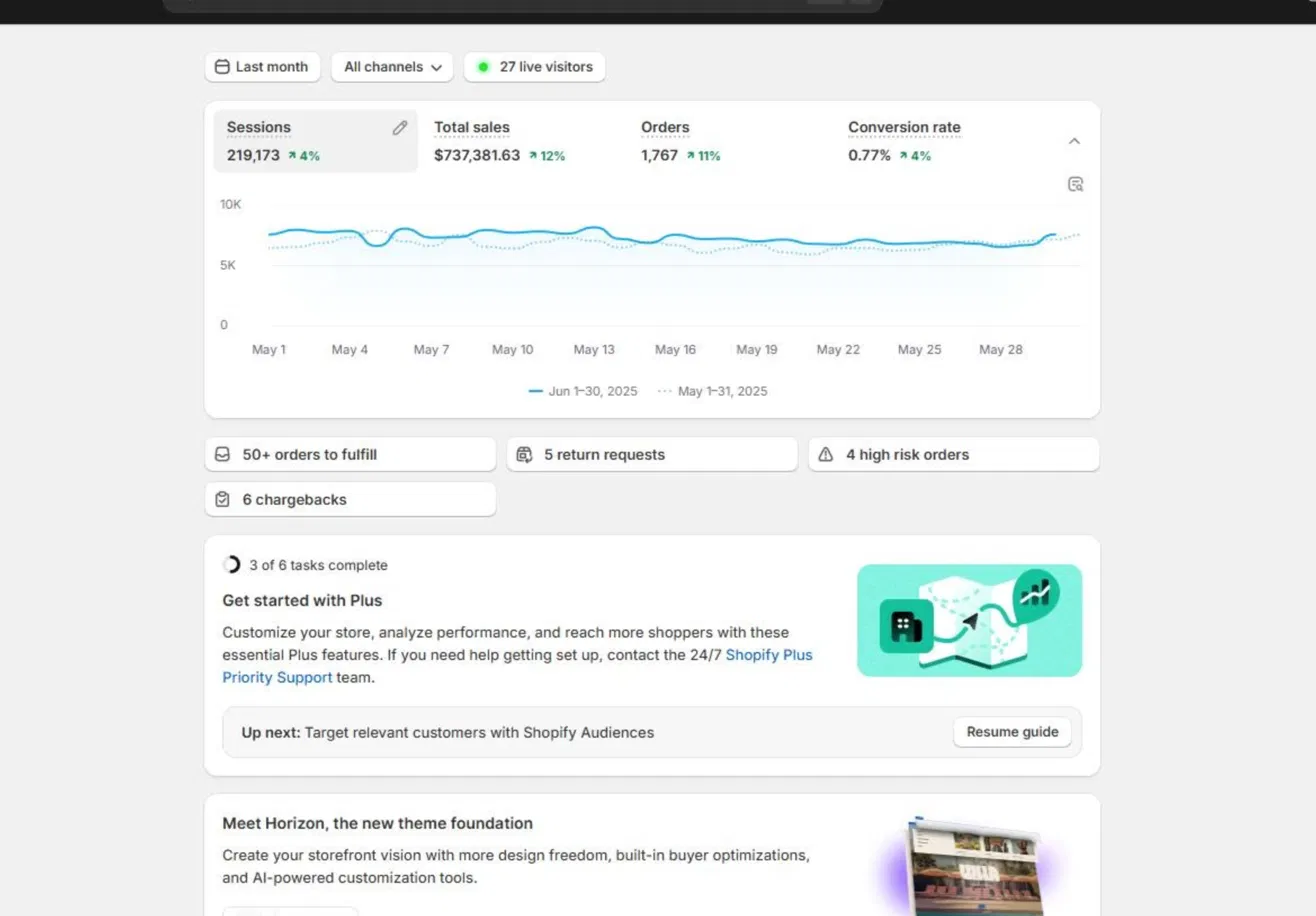
Shopify Analytics — April 2024 (start) vs June 2025 (peak). Client name redacted per NDA. Revenue and session data verified directly from dashboard.
Month 1
Campaign kicks off with the store already generating $192,049 in monthly sales from 53,213 sessions — solid numbers, but organic traffic was inconsistent and heavily reliant on paid channels. A full technical SEO audit revealed crawlability issues, unoptimized product pages, thin category descriptions, and missing schema markup across the product catalog.
Months 2–4
Fixed crawl issues flagged in the audit — duplicate content, thin pages, improper canonical tags, and slow load times on mobile. Rewrote product page titles and meta descriptions using buyer-intent keyword data. Added product schema markup and breadcrumb structured data. Internal linking was rebuilt to pass authority from high-traffic category pages down to individual products.
Months 5–8
Launched a targeted content strategy around buyer-intent keywords and comparison queries — the type of searches that convert. Built topical clusters around core product categories. Simultaneously ran a white-hat link building campaign through niche-relevant outreach, securing editorial placements that boosted domain authority. Sessions began compounding month over month.
Months 9–14
Organic compounding took full effect. Monthly sessions hit 219,173 — a 312% increase from the April 2024 baseline. Revenue peaked at $737,381 in June 2025, representing a 284% increase. Orders grew from 543 to 1,767 per month. The store's reliance on paid traffic decreased as organic became the dominant acquisition channel. Average order value also increased from $353 to $417 as SEO traffic attracted higher-intent buyers.
The store was already generating $192,049 per month in sales when we started — so this wasn't a zero-to-one project. The challenge was different: the business was growing but its traffic was fragile, paid-dependent, and not building any compounding asset. Organic search was underperforming relative to the store's potential.
The technical foundation had gaps — crawlability issues, thin product pages, no schema markup, poor internal link architecture — that were preventing the store from ranking for the high-intent commercial keywords it should have owned. Category pages, which are the workhorses of e-commerce SEO, had minimal content and zero topical depth. The backlink profile was thin relative to competitors in the niche.
The goal: make organic search a reliable, compounding revenue driver — not a secondary channel that relies on luck or algorithm grace.
Before any content or links, the crawlability issues were addressed. Fixed duplicate content across product variants, corrected canonical tags, resolved indexation problems, and improved page load speed. Google can't rank what it can't crawl efficiently — these fixes alone helped previously invisible pages start appearing in search results within the first 6 weeks.
Category pages were rewritten with target keywords, proper heading structure, and introductory content that matched what buyers actually search for. These pages act as traffic hubs — when they rank, they pull sessions to every product underneath them. Optimizing these first delivered the fastest traffic wins in months 2 and 3.
Implemented Product, Review, BreadcrumbList, and FAQ schema across the product catalog. Rich results (star ratings, price, availability) appearing directly in Google search results improved click-through rates without needing to move up a single position. More clicks from the same rank = more revenue before any ranking movement even happens.
Full crawl audit, duplicate content resolution, canonical tag correction, Core Web Vitals improvements, XML sitemap optimization, and Shopify-specific crawl budget fixes for large product catalogs.
Rewrote title tags and meta descriptions with buyer-intent keywords. Added unique, keyword-rich category descriptions. Optimized image alt text across the full product catalog. Structured headings for crawlers and conversions simultaneously.
Rebuilt internal linking to flow PageRank from the homepage and category pages down to individual products. Created keyword-rich anchor text patterns. Added breadcrumb navigation for both UX and SEO. Priority products received disproportionate internal link equity.
Developed topical clusters around core product categories — targeting informational, comparison, and buyer-intent keywords at each funnel stage. Blog content drove top-of-funnel traffic that was then funneled into category and product pages via internal links.
Ran a niche-relevant outreach campaign targeting editorial placements on industry publications, product review sites, and relevant blogs. Focused on quality over quantity — each link built was contextually relevant and placed on pages with real traffic, not link farms.
Implemented Product, Review, BreadcrumbList, Organization, and FAQ schema markup across the store. Rich results visibility in SERPs improved CTR from existing rankings, compounding the effect of every position gained through other optimizations.
Peak monthly revenue — June 2025. Up from $192,049 in April 2024. A 284% revenue increase in 14 months, driven entirely by organic search growth.
| # | Metric | Apr 2024 (Start) | Jun 2025 (Peak) | Growth |
|---|---|---|---|---|
| 01 | Monthly Sessions | 53,213 | 219,173 | +312% |
| 02 | Monthly Revenue | $192,049 | $737,381 | +284% |
| 03 | Monthly Orders | 543 | 1,767 | +226% |
| 04 | Avg Order Value | $353.68 | $417.31 | +18% |
| 05 | Conversion Rate | 0.97% | 0.77% | -0.20pp* |
* Conversion rate dipped as SEO brought significantly more top-of-funnel traffic. The absolute revenue increase of $545K+ demonstrates the net impact was strongly positive.
Ready to grow your
E-Commerce revenue?
Let's build an SEO system that compounds — not just traffic, but real revenue from buyers actively searching for what you sell.